
First day jitters are a normal, short-lived form of anticipatory anxiety, and most kids settle within the first week. Reading Julie Danneberg’s First Day Jitters together the night before and teaching a simple breathing exercise your child can use in the moment are helpful strategies.
TL;DR:
- First day jitters primarily stem from fear of the unknown, social judgment, and routine disruption, manifesting as physical symptoms like stomachaches or shallow breathing.
- Reading First Day Jitters by Julie Danneberg helps children realize their anxieties are normal and shared by adults, easing shame and encouraging openness.
- Pre-visit routines, such as walking the route and practicing drop-off, combined with simple calming techniques and routines, can significantly reduce anxiety.
- Teaching kids to identify specific fears and plan concrete steps builds control, with breathing exercises like balloon or five-finger breathing enhancing their coping skills.
- A calm kit containing tactile squishies, a favorite object, and a visual checklist supports self-regulation, especially when shared with classroom rules for hygiene and rotation.
Table of Contents
- What Are First Day Jitters, Really?
- Read-Alouds and Classroom Resources That Actually Help
- Ready-to-Run Activities for Before, During, and After Day One
- Techniques Adults Can Teach in Five Minutes or Less
- When Jitters Need More Than a Quick Fix
- Where Squishy Toys Fit Into a Calm Kit
- Why We Care About This Beyond Selling Squishies
- Build a Starter Calming Kit for Day One
- Sources
- FAQ
What Are First Day Jitters, Really?
First day jitters describe the knot in the stomach, the racing thoughts, the sudden urge to stay home. Headstart frames this as ordinary anticipatory anxiety, the same “butterflies” feeling adults get before a big presentation, just louder in a five-year-old’s body.
First day jitters often manifest as physical symptoms such as stomachaches, trouble sleeping, restlessness, or faster breathing before children can verbally express anxiety. Watch for these:
- Trouble falling or staying asleep the night before
- Complaints of a stomachache or headache with no other cause
- Clinginess, irritability, or sudden tears over small things
- Repetitive questions (“What if I can’t find my classroom?”)
- Fast, shallow breathing or fidgeting hands
These reactions usually trace back to three sources: fear of the unknown (new building, new faces, new rules), worry about social judgment (will other kids like me?), and disruption to routine (different wake time, different lunch, different everything). None of that is a red flag on its own. It’s a brain doing exactly what brains do when the map runs out.
Read-Alouds and Classroom Resources That Actually Help
The book to start with is First Day Jitters by Julie Danneberg. Penguin Random House lists it for early elementary school-aged children roughly in kindergarten through third grade, with a Lexile level of 350L and an Accelerated Reader score of 2.4, which puts it comfortably within early elementary reading and listening range. The story works because of its twist: the anxious character revealed on the last page turns out to be the teacher, not a student. That reveal does something quietly powerful. It tells kids the adults in the room feel the same flutter they do, which strips away the shame that usually comes with admitting fear.
Beyond that one title, a few other resource types round out a classroom or home toolkit:
- Teacher activity packs built around the book, with discussion prompts for before and after reading
- Printable memory sheets where kids draw or write one good thing from day one
- A “Certificate of Courage” kids fill out and take home, turning a hard morning into a small win
- Social stories describing the school routine in plain, predictable steps
- A classroom read-aloud transcript, useful for teachers who want the exact narration cadence
You can find the full read-aloud transcript on HeadStart.gov, and publisher pages and educator platforms like Epic often carry supplementary activity packs tied to the same title.
Ready-to-Run Activities for Before, During, and After Day One
Timing matters as much as content. Split your approach into three windows.
Before the first day:
- Walk the actual route to school or the classroom, if you can, even once.
- Tell a short social story: “First we’ll walk in, then hang up your backpack, then find your seat.”
- Practice the morning commute or drop-off exactly as it will happen, including who says goodbye and where.
- Build a morning checklist together (breakfast, backpack, shoes, goodbye hug) so nothing feels like a surprise.
During the first day:
- Use a short calm-entry ritual, like a special handshake or a whispered “you’ve got this” at the door.
- Pair your child with a buddy, whether that’s a classmate the teacher assigns or a sibling checking in at lunch.
- Try a 20-second grounding script: “Feet on the floor, one deep breath, name one thing you see.”
- Hand out name tags with a prompt on the back (“My favorite animal is…”) so conversation starters are built in.
After the first day:
- Fill out a simple reflection sheet: one hard part, one good part, one thing to try tomorrow.
- Present the Certificate of Courage, even if the day was rocky. Courage isn’t the same as ease.
- Run a short small-group check-in the next morning so kids hear that others felt the same way.
Pro Tip: Keep the after-school reflection to one question if your child is tired or cranky. “What’s one good thing that happened?” gets more honest answers than a five-part debrief.
Techniques Adults Can Teach in Five Minutes or Less
The single most useful skill is naming the fear. Vague dread is hard to fight. A specific worry is something you can actually solve. Educator resources built around First Day Jitters recommend asking, “What’s the scariest thing you think might happen?” and then listing two or three concrete steps to handle exactly that worry, whether it’s finding the bathroom or not knowing anyone at lunch.
Once the fear has a name, mental previewing takes over. Walk through the physical details out loud: which door you’ll enter, where the cubby is, what happens right after the bell rings. Healthline’s research on anticipatory anxiety notes that converting worry into a plan increases a person’s sense of control, which is exactly what previewing does for a six-year-old staring down an unfamiliar hallway.
Breathing exercises round out the toolkit, and different situations call for different ones:
- Balloon breathing (inhale for four counts, exhale for six) works well the night before, when a child is lying in bed with racing thoughts.
- Five-finger breathing (tracing each finger while inhaling up, exhaling down) is quiet enough to use at a desk without drawing attention.
- Bumblebee breath (a low hum on the exhale) works for younger kids who need something more physical to focus on.
Consistent routines do a lot of the heavy lifting here too. Maintaining a consistent bedtime, breakfast, and preparing clothes the night before helps reduce decisions and ease anxiety. Consider building a simple calm kit: a small pouch with a favorite tactile object, a family photo, and a written reminder of the morning checklist.
When Jitters Need More Than a Quick Fix
Most first day jitters fade within a week or two, often faster once the routine becomes familiar. Watch for signals that suggest something beyond the ordinary adjustment period.
- Anxiety lasting more than two to three weeks with no signs of easing
- Refusal to attend school, or repeated pleas to stay home
- Physical symptoms severe enough to interfere with eating or sleeping most nights
- Panic-like reactions (hyperventilating, shaking) rather than ordinary nervousness
- Withdrawal from friends or activities the child previously enjoyed
If you’re seeing these, start with a simple log noting when symptoms happen and what triggered them. Talk to the teacher or school counselor next. If the pattern continues, a conversation with the pediatrician is a reasonable next step, and a referral to a child therapist is sometimes the right call from there. This is the exception, not the rule. The overwhelming majority of first day jitters resolve on their own once the unknown becomes known.
Where Squishy Toys Fit Into a Calm Kit
Tactile tools have a real, if modest, role in self-regulation. Fidgets and soft squeezable objects give an anxious child something physical to do with restless hands, which can redirect attention away from a racing mind and toward a repetitive, soothing motion. This isn’t a treatment. It’s a nonclinical support, best used alongside the breathing and previewing techniques already covered.
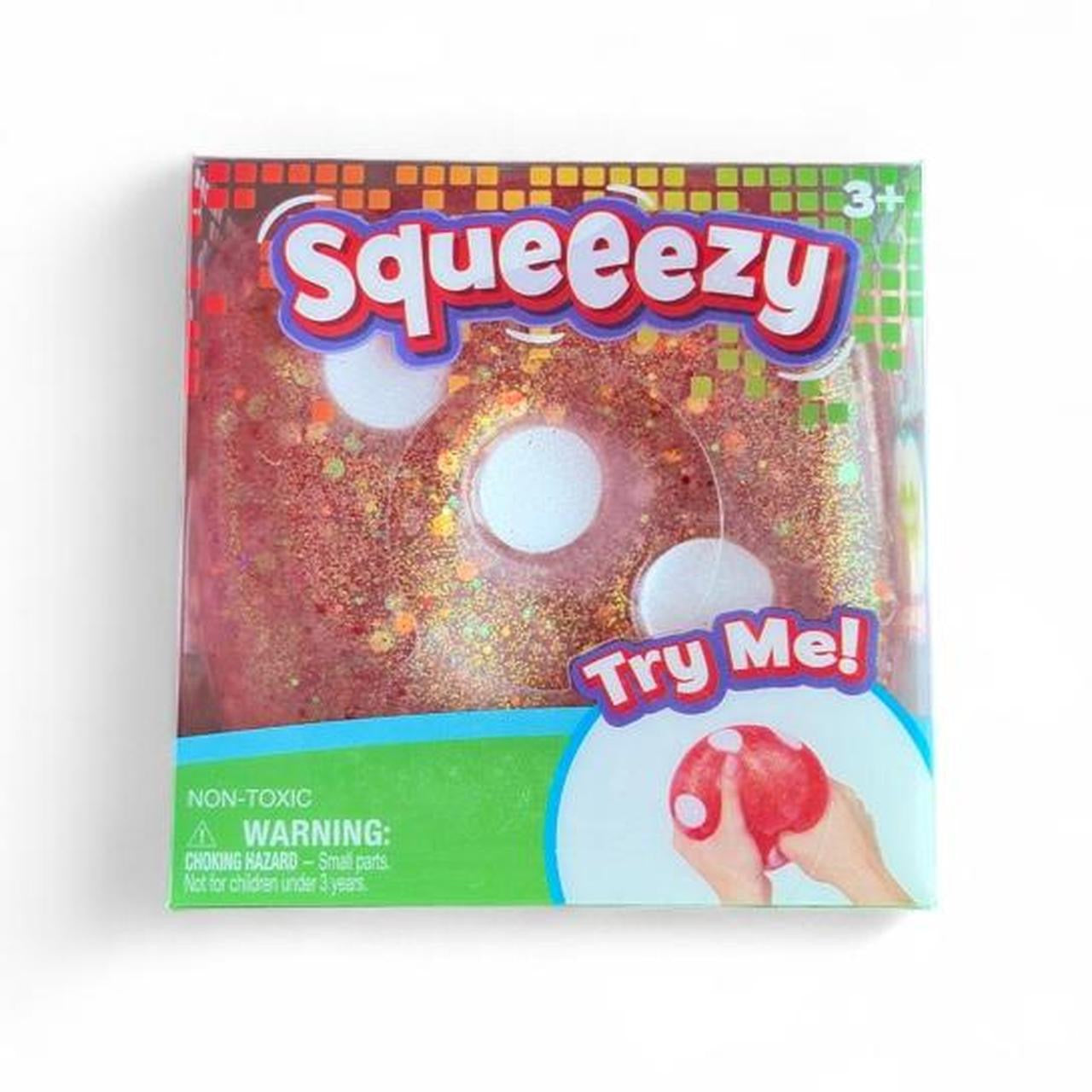
For a starter calm kit, look for texture variety and simple mechanics: Squeezy Pink Dice, Squeezy Peach, the Viral Tiktok Crunchy Tofu Squishy, Squeezy Pineapple, Squeezy Carrot Squishy, the Viral TikTok Crunchy Butter Squishy, NeeDoh Nice Cube Glitter & Glow, and the Squeezy Game Controller each offer a different feel, from slow-rise foam to a crunchy internal texture to a glittery, moldable cube.
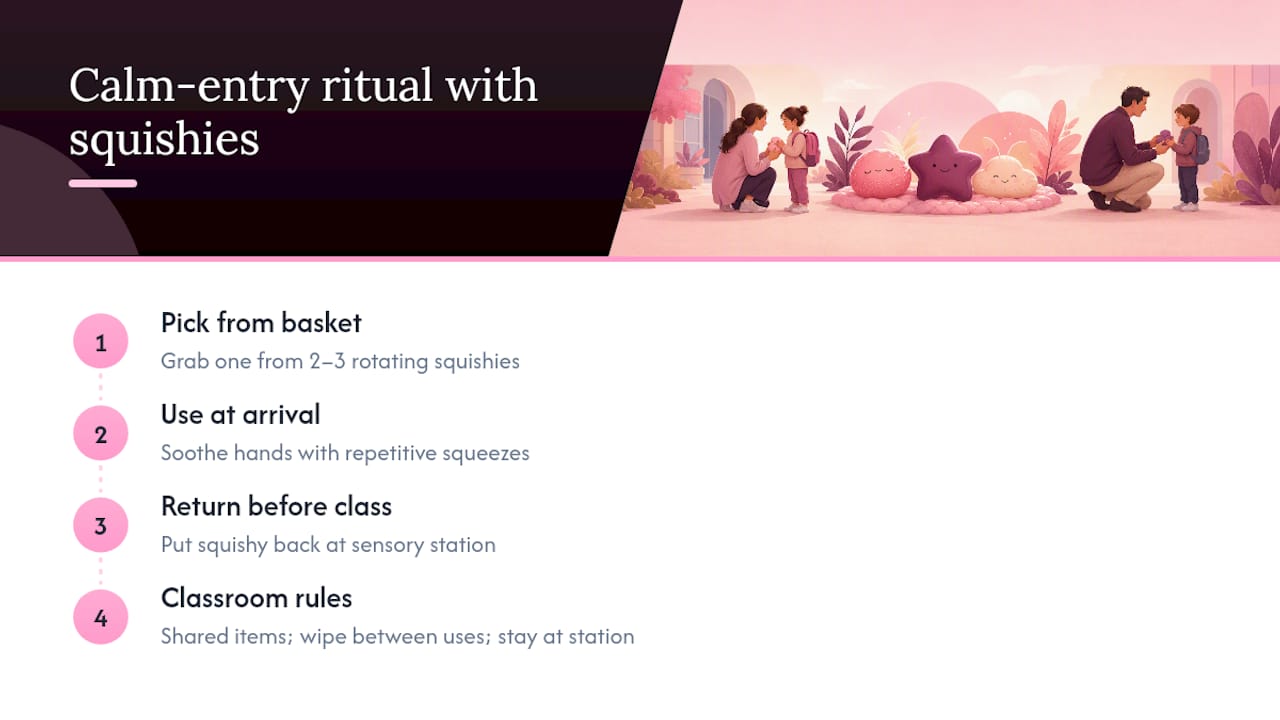
In a classroom setting, a few ground rules keep things simple: designate squishies as shared classroom items rather than personal toys unless a parent sends one in, wipe them down between uses, and set a clear rule that they stay at the sensory station rather than traveling to every desk.
Pro Tip: Rotate two or three squishies in a small basket by the classroom door so kids can grab one during the calm-entry ritual and return it before sitting down. It keeps the transition short and the sharing fair.
Why We Care About This Beyond Selling Squishies
I’ve watched enough kids white-knuckle their way through a school doorway to know that the fear itself isn’t the problem. It’s feeling alone in it. That’s exactly why the twist in First Day Jitters lands so well: an adult admits the same fear out loud, and suddenly the kid isn’t the only nervous one in the room.
We built Archiesquishies around a simple idea: a small tactile object in a nervous kid’s pocket can be one more anchor in a morning full of unknowns. It’s not a cure and never claims to be. But between a good book, a breathing exercise, and something soft to squeeze, a child has real tools instead of just a knot in the stomach. Customer feedback consistently points to the texture and squeeze quality as the reason a squishy becomes a genuine go-to for both kids and adults working through a stressful moment.
— Archie
Build a Starter Calming Kit for Day One
Once you’ve got the book and the breathing exercise down, a small kit of tactile squishies rounds out the toolkit without adding complication. For a first calm kit, consider starting with the Squeezy Pink Dice for its simple squeeze mechanics, the Squeezy Peach for a softer slow-rise texture, and the Viral Tiktok Crunchy Tofu Squishy for kids who respond better to a crunchy internal sound and feel.
For classroom use, wipe each squishy with a gentle disinfectant wipe between students and let it air dry fully before the next use, since trapped moisture can affect the foam over time. If you’re building a shared calm-down station rather than individual kits, rotate two or three textures so kids don’t fight over a single favorite. Many squishy toys are designed for genuine squeeze and stress relief rather than novelty alone, which matters when a toy is getting handled by an anxious kid every single morning. Browse the full squishy collection to put together a kit that fits your classroom or your own kid’s backpack.
Sources
A few sources cover the ground here better than a generic search ever will:
- Headstart
- First Day Jitters by Julie Danneberg — Penguin Random House
- TeachingBooks resource on First Day Jitters
- New job anxiety: what it is and strategies to try — Healthline
FAQ
What does “first day jitters” mean?
It refers to anticipatory anxiety, the nervous, stomach-fluttering feeling that shows up before starting something new, most often school, a new job, or an unfamiliar routine.
Are first day jitters normal?
Yes. HeadStart.gov’s guidance treats jitters as a common, expected reaction, not a sign that something is wrong with your child.
What grade level is the book “First Day Jitters”?
Penguin Random House lists it for early elementary school-aged children roughly in kindergarten through third grade, with a Lexile level of 350L.
How do you get rid of first day jitters?
Name the specific fear, walk through the day’s details ahead of time, practice a short breathing exercise, and keep a predictable morning routine. Most jitters fade within the first week once the unknown becomes familiar.
Recommended
- Needoh Fuzzball Flower Power
- Kool-Aid Squishi Toy
- NeeDoh Nice Cube Glitter & Glow Squishy
- Viral TikTok Crunchy Soap Squishy
Made with BabyLoveGrowth to get found on Google and AI search