
Dump dry rice in a bowl, mix cornstarch with water, or hand your toddler a squishy toy to squeeze. Those are three of the five fastest sensory play options: dry sensory bins, wet or slimy mixtures, edible-safe bases for mouthers, nature finds like leaves and rocks, and squishy toy add-ins for calming input. For low mess, stick with a dry rice bin; for babies who still mouth everything, cooked pasta or yogurt paint is safest. Occupational therapists point to repetitive scooping and pouring as genuinely calming for overstimulated kids, and a squishy toy fits neatly into that same toolbox as a reusable, mess-free option.
TL;DR:
- Dry sensory bins with rice or pasta are the easiest to set up and produce the least mess, ideal for quick activities.
- Sensory bases should match the child’s mouthing stage, with cooked pasta and yogurt being safest options for under 12 months.
- Using kitchen tools like tongs or funnels enhances skill-building without requiring extra shopping or preparation.
- A squishy toy offers a reusable, mess-free tactile experience that can serve as a calming or sorting activity for children of various ages.
- Containing the activity with a surface cover and ending when interest wanes simplifies cleanup and prevents play from becoming overwhelming.
Table of Contents
- Quick sensory play ideas by base
- What tools turn a bin into a learning activity
- Which sensory bases are safe at each age?
- Containment tricks that make cleanup painless
- Five sample activities to try today
- How Archie Squishies fit into sensory play
- Making sensory play a habit, not a project
- Optional add-ons worth considering
- Sources
- FAQ
Quick sensory play ideas by base
Sensory play doesn’t need a themed kit or a trip to the craft store. Pick a base, add a scoop, and you’ve got an activity. Here’s how the main categories stack up on mess and prep time.
- Dry bin (5 minutes, low mess): Dry pasta, rice, or pom-poms in a bin with cups for scooping. Add letter magnets or plastic numbers hidden inside for a counting twist.
- Wet or slimy (10 minutes, high mess): Oobleck is cornstarch and water mixed until it turns solid under pressure and liquid when you let go. Cloud dough uses an 8:1 ratio of flour to oil and holds a shape like packable sand, according to The Artful Parent. Shaving foam spread on a tray works for finger painting with almost no prep.
- Edible-safe (5 minutes, low to medium mess): Cooked, cooled pasta noodles for grabbing and threading. Yogurt tinted with food coloring makes safe finger paint. Edible oobleck swaps in baby cereal or pudding for cornstarch, a version Kid Activities with Alexa built specifically for toddlers who still mouth things.
- Nature-based (2 minutes, low mess): A basket of pine cones, smooth rocks, and dry leaves collected on a walk. Great for outdoor play with almost zero cleanup.
- Noisy sensory station (2 minutes, low mess): Pots, wooden spoons, and metal measuring cups turned into a kitchen band. Toddlers learn cause and effect fast when banging makes noise.
Rotate which base you use week to week, and you rarely need to buy anything new.
What tools turn a bin into a learning activity
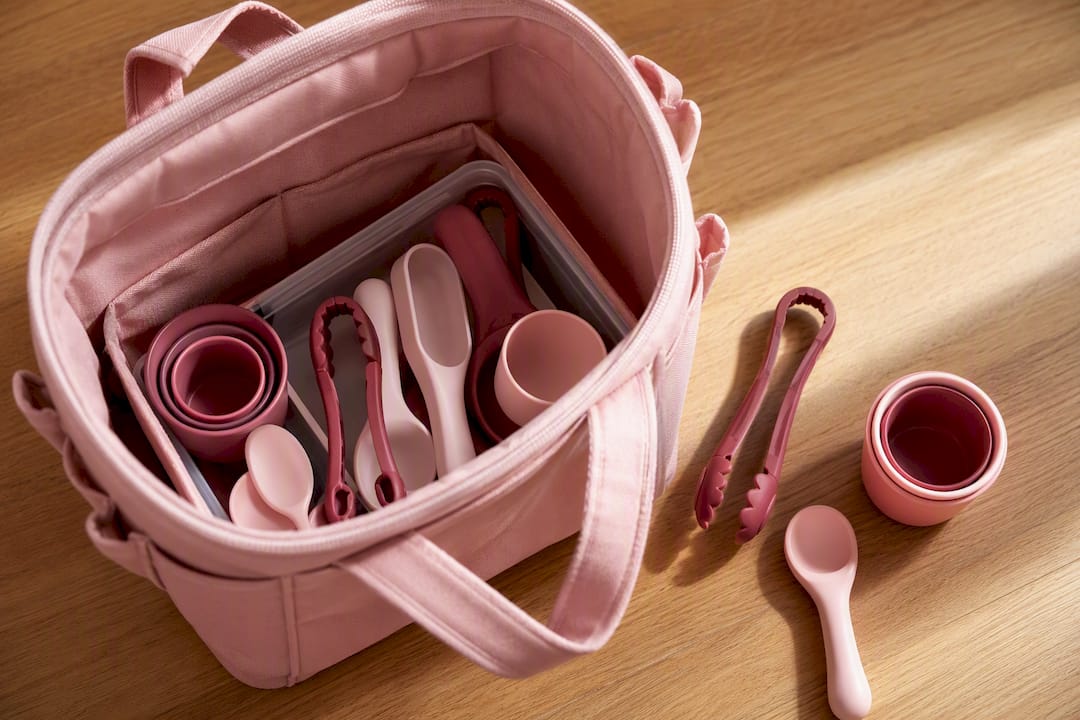
The bin itself is just a container. What makes it educational is what you hand your child to use inside it. A set of basic kitchen tools does more for skill-building than most store-bought sensory kits.
- Measuring cups and bowls: teach early volume sense, like which cup holds more.
- Tongs or tweezers: build the pincer grasp kids need for writing later.
- Funnels: develop hand-eye coordination through pouring and aiming.
- Silicone muffin tins: great for sorting by color or size into separate cups.
- Spoons and scoops: strengthen wrist control and grip.
- Sieves: introduce the idea of separating small from large.
- Magnifying glass: turns a nature basket into a mini science lesson.
None of this requires a shopping trip. Pull items from your kitchen drawer and keep them in one bin so setup takes seconds.
Pro Tip: Keep a dedicated “sensory kit” tote with tongs, cups, and scoops packed and ready. When your child asks to play, you grab one bin instead of hunting through drawers.
Which sensory bases are safe at each age?
Mouthing is normal, not a sign your child is doing something wrong. It’s how babies and young toddlers explore texture, so your filler choice needs to match their stage.
Under 12 months, skip anything small or hard. Dry beans, unpopped popcorn, and pom-poms are choking risks if swallowed, so stick to cooked pasta, plain yogurt, or pumpkin puree instead. Between 12 and 24 months, kids still mouth occasionally but can usually handle supervised textured play with items like oatmeal or shredded paper, as long as you’re within arm’s reach. By age two and up, most children have moved past mouthing enough to safely use dyed rice, dried beans, or kinetic sand under general supervision.
A short safety checklist covers most situations:
- Supervise the entire activity, no exceptions for mouthers.
- Keep small hard items (beads, dry beans) away from anyone under two.
- Choose a washable surface or tablecloth before you start.
- End the activity the moment interest fades rather than pushing for more.
Containment tricks that make cleanup painless
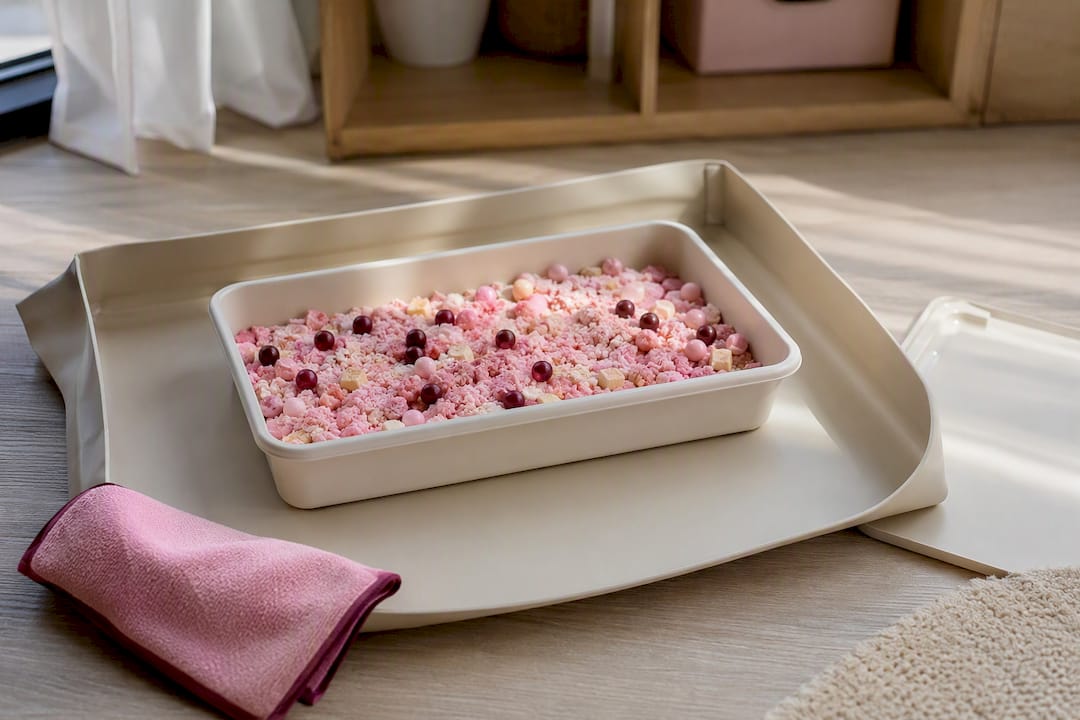
Mess is the number one reason parents skip sensory play, but a few habits fix that fast. Lay a vinyl tablecloth or old shower curtain under the bin before you start, or move the whole activity into the bathtub or a highchair tray where spills stay contained.
- Gather: scoop loose filler back into its storage container using the same cups your child played with.
- Sweep or vacuum: a quick pass over the containment cloth catches stray pieces in under a minute.
- Store: fold the cloth and stash it with your sensory kit so it’s ready for next time.
Pro Tip: Don’t wait for a full mess before ending play. When your toddler starts throwing filler instead of exploring it, that’s your cue to wrap up before frustration sets in.
Full cleanup isn’t always necessary either. If the bin is contained and nobody’s stepping in it, leaving it out until nap time is a fair trade for five extra minutes of peace.
Five sample activities to try today
Each of these takes under ten minutes to set up and gives you a clear stopping point once your child loses interest.
- Dyed rice treasure hunt. Mix white rice with food coloring and a splash of vinegar, let it dry, then hide small toys inside. Hand your child tongs and ask “can you find the blue dinosaur?” to combine fine motor work with language practice.
- Edible oobleck play. Mix cornstarch and water until it’s solid when squeezed and runny when released. Let your toddler press both hands in freely; the resistance-then-release rhythm has a genuinely calming effect for kids who are wound up.
- Cloud dough sculpting. Combine flour and oil at an 8:1 ratio until it holds a shape like damp sand. Add cookie cutters or mini figures for imaginative building and mashing.
- Water bead rescue. Once water beads have expanded, hide small toys inside and hand your child a spoon to “rescue” them into a second bowl, building hand-eye coordination through transfer.
- Kitchen band station. Line up pots and metal bowls, hand over wooden spoons, and let your child experiment with how different surfaces sound when struck.
How Archie Squishies fit into sensory play
Pantry bases do most of the heavy lifting in sensory play, but a squishy toy adds a reusable, no-cleanup option for the moments in between. Try a texture comparison game between a squishy and a cotton ball, use one for calm-down squeeze practice before nap, or drop a few into a bin as sorting and counting manipulatives.
- NeeDoh Nice Cube Glitter & Glow: slow-rise squeeze for a calm-down corner.
- Squeezy Game Controller: shaped for repetitive fine-motor squeeze games.
- Squeezy Peach: sized right for sorting and counting inside a bin.
As with any small toy, supervise use by age and skip anything with removable small parts for children under three.
Making sensory play a habit, not a project
My favorite setups are the ones that take less time to prepare than to clean up: a bin of dry rice, a handful of tongs, done. Rotating one filler each week keeps things new without adding real prep work. Set a recurring 10 to 15 minute sensory window on a weekday afternoon, swap one item weekly, and you’ll find the routine builds itself instead of becoming another thing to plan.
— Archie
Optional add-ons worth considering
Pantry staples and kitchen tools cover most of what sensory play needs, and that’s genuinely enough for most families most of the time. If you want a durable, reusable texture option that doesn’t require a grocery run or a cleanup routine, a few Archie Squishies products slot in well without replacing anything you already do.
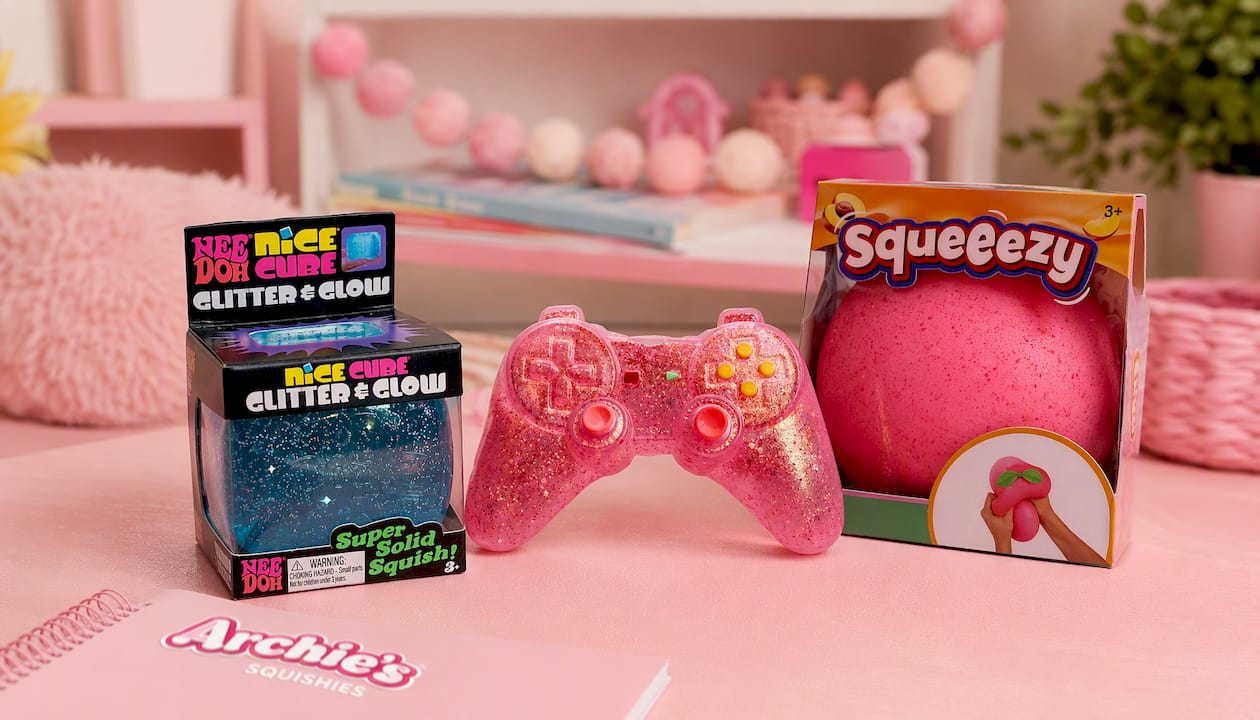
The NeeDoh Nice Cube Glitter & Glow works well as a grab-and-squeeze option for a calm-down corner, since its slow-rise texture holds up to repeated squeezing far longer than most homemade materials. The Squeezy Game Controller gives older toddlers and preschoolers a shape built for fine-motor squeeze games, and the Squeezy Peach doubles as a tactile counting or sorting piece inside any bin. None of these replace a bowl of rice or a batch of cloud dough. They just give you a texture option that’s ready the second your child wants to squeeze something, no mixing required. Browse the full lineup at Archie Squishies when you’re ready to add one to your rotation.
Sources
- 7 sensory play ideas for toddlers — The Artful Parent
- Sensory bins for toddlers: Our favorite ideas and items — NAPA Center
- Sensory activities for toddlers & preschoolers — Busy Toddler
- Edible-Safe Oobleck Recipe — Kid Activities with Alexa
FAQ
What is the easiest sensory play idea for beginners?
A dry rice or pasta bin with a few measuring cups takes under five minutes to set up and creates almost no mess compared to wet or edible options.
What sensory fillers are safe for babies who still mouth objects?
Cooked pasta, plain yogurt tinted with food coloring, and pumpkin puree are all taste-safe options that work well for children under 12 months.
What is the ratio for cloud dough?
Cloud dough uses 8 parts flour to 1 part oil, mixed until it holds a shape similar to damp sand.
Can squishy toys count as sensory play?
Yes. Squeezing a slow-rise squishy toy like the NeeDoh Nice Cube Glitter & Glow gives repetitive tactile input similar to squeezing dough, and it requires zero cleanup.
How do I stop sensory play from becoming a huge mess?
Contain the activity with a vinyl tablecloth or shower curtain underneath, and end play as soon as your child’s interest fades rather than letting it escalate.