
Most squishy toys should stay away from children under 3, and the reasoning is simple: tear risk, small-piece hazards, and gel or plastic filling that can leak into a curious mouth. Most squishies on the market carry a manufacturer age grade of 3+, even ones tested for broader use, because of crib and choking warnings. Gel or plastic-filled fidgets are the biggest exception to relax on: skip them for infants and any child who still mouths toys, regardless of age.
TL;DR:
- Most squishies are safe for children aged 3 and older, but gel or plastic-filled toys should be avoided for infants and mouth explorers.
- Cheaper gel and counterfeit squishies pose burn risks due to unsafe materials, especially if seams tear or the toy is mishandled.
- Regular inspection and proper cleaning of toys are essential; damaged squishies must be discarded immediately to prevent choking or toxicity.
- Always verify packaging for clear age grades, manufacturer details, and compliance labels before purchase to avoid counterfeit or unsafe products.
- The main hazards include choking, leaks of toxic fillings, burns from unsafe materials, and small pieces from torn toys, with rip seams being the most common failure point.
Table of Contents
- Squishy Age Range by Developmental Stage
- What Material Tells You About Risk
- How to Buy and Spot a Fake Squishy
- Caring for Squishies and Knowing When to Toss One
- What Archie Squishies Puts on Every Product Page
- The Real Hazards Behind Every Squishy Warning
- Matching the Squishy to the Job It’s Actually Doing
- An Editorial Take on Age Labels That Undersell the Real Risk
- Finding the Right Squishy in Archie’s Collection
- Where to Verify Safety Information
- Sources
- FAQ
Squishy Age Range by Developmental Stage
Age labels on packaging are a starting point, not the whole answer. A 3+ grade on a box doesn’t mean every 3-year-old handles every squishy the same way, so it helps to think in stages instead of a single cutoff.
Infants (0 to 12 months). Keep squishies out of the crib entirely, even soft plush versions marketed as nursery-safe. Gel or plastic-filled types have no place near a baby who explores everything by mouth. Consumer Reports has specifically warned against giving squishy gel toys to babies or any child who might bite into one.
Under 3. Follow the 3+ label on the box without exception at this stage. Skip anything with thin outer skin, small attached pieces, or a “tears easily” feel when you squeeze it in the store.
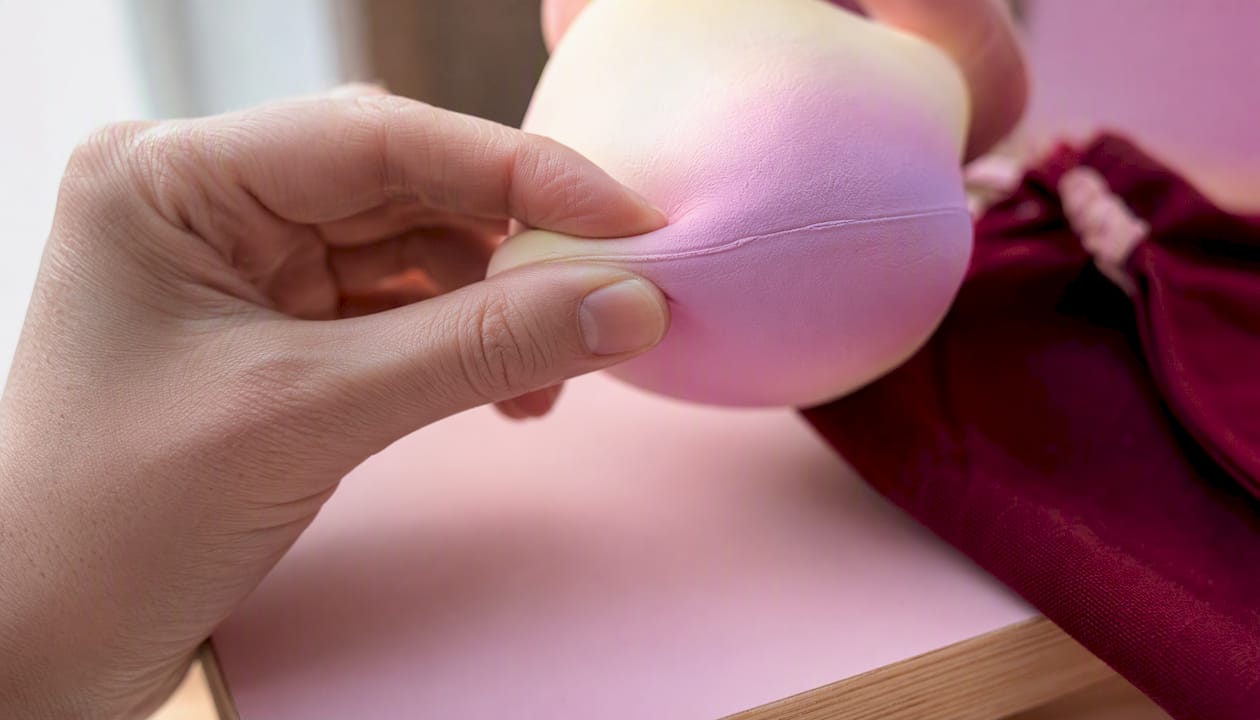
Ages 3 to 5. Sturdy plush or well-made silicone squishies are reasonable with an adult nearby. This age group still tests things with their teeth sometimes, so redirect chewing habits away from the toy rather than assuming the material can take it.
Ages 6 to 8. Most standard squishies are fine once you’ve checked size and build quality. DIY squishy-making kits usually carry an 8+ grade because they involve small components and adult-level assembly steps.
Ages 9 and up. Kids in this range can collect, trade, and display squishies with minimal supervision. This is the age to start teaching real handling rules: no biting, no heating, no leaving them in a hot car.
- Infants: no squishies in the crib, no gel-filled types nearby
- Under 3: strict 3+ label compliance
- Ages 3 to 5: sturdy plush or silicone, supervised
- Ages 6 to 8: most types okay after a size/build check
- Ages 9+: independent use, with handling rules taught explicitly
What Material Tells You About Risk
The material inside a squishy matters more than its price tag or cute design. Gel and plastic-filled toys carry the highest risk profile because a torn seam releases a substance a toddler can swallow or choke on. Both Consumer Reports and the Consumer Product Safety Commission have flagged this category specifically.
Slow-rise foam and silicone squishies generally leak less than gel versions, but quality still varies wildly between manufacturers. A cheap silicone toy with a thin outer skin and sloppy seams can fail just as easily as a gel one.
Statistic to know: the CPSC’s 2026 alert didn’t just repeat old choking warnings. It specifically called out counterfeit squishy toys as a burn hazard. This is a risk most parents have never heard connected to a squeeze toy.
Plush-style squishies sit in an odd middle ground. A manufacturer might test one for all ages, then still slap a 3+ grade on the packaging with a crib warning attached, because soft filling and small attachments (eyes, bows, ribbon) create risk for infants even when the core material is gentle.
Before buying, run through this quick check:
- Squeeze the seams. Do they feel glued, stitched, or fused evenly?
- Smell it. A strong chemical odor is a warning sign, not a “new toy smell.”
- Check the packaging print quality. Blurry logos or misspelled brand names often signal a counterfeit.
- Look for a manufacturer name and contact address, not just a barcode.
How to Buy and Spot a Fake Squishy
Reading a label takes ten seconds and tells you almost everything you need before checkout. Here’s what to check every time, whether you’re shopping in a store or scrolling a marketplace listing:
- Confirm the age grade is printed clearly, along with any ASTM or CPSC compliance language on the packaging.
- Look for a real manufacturer or importer name and address. No contact information is a red flag on its own.
- Check for batch or lot numbers. Legitimate toy makers include these for recall tracking; counterfeits usually skip them.
- Skip listings that are suspiciously cheap compared to the same product elsewhere, especially with no brand name attached.
- Never heat, microwave, or leave a squishy in direct sun or a hot car. Consumer Reports’ 2026 coverage on counterfeit squishies ties fake versions directly to burn injuries, not just choking.
Pro Tip: If a listing photo looks identical across five different sellers with five different prices, you’re likely looking at a counterfeit batch, not five legitimate retailers.
Trust your nose and your fingers here more than the star rating. A toy that smells overwhelmingly chemical or feels tacky right out of the package isn’t one you want a young child handling unsupervised.
Caring for Squishies and Knowing When to Toss One
A squishy is only as safe as its last inspection. Check toys regularly for tears, bulges, or sticky leakage, and throw damaged ones away immediately rather than patching them with tape or hoping the seam holds.
- Inspect weekly if a young child uses the toy daily, monthly for shelf collectibles.
- Clean according to the manufacturer’s instructions; most plush squishies are surface-clean only, while silicone typically tolerates a mild soap and water wipe.
- If a child bites into a squishy or swallows any part of it, contact Poison Help’s chat service or call Poison Control right away rather than waiting to see what happens.
- The Iowa Poison Center’s guidance on squishy sensory toys recommends having the product packaging on hand when you call, since it speeds up identifying the exact filling material.
For older kids trading or filming squishies for social media, add one more conversation to the list: no biting on camera, no heating for a “satisfying” video effect, and no swapping toys with strangers without a parent checking the source first.
What Archie Squishies Puts on Every Product Page
Age guidance only helps if it’s easy to find before you click “buy.” Some squishy sellers list age grades and material descriptions on individual product pages to help buyers understand the toy’s composition before checkout.
Before ordering, scroll to the care and materials section on any product page to confirm it fits your child’s age and habits. That habit, checking the label before the cart, catches most of the mismatches parents run into later.
The Real Hazards Behind Every Squishy Warning
Choking gets the most attention, but it’s only one of four hazards worth knowing by name. A torn squishy can shed small pieces, and any child who still explores toys by mouth is at risk regardless of age grade.
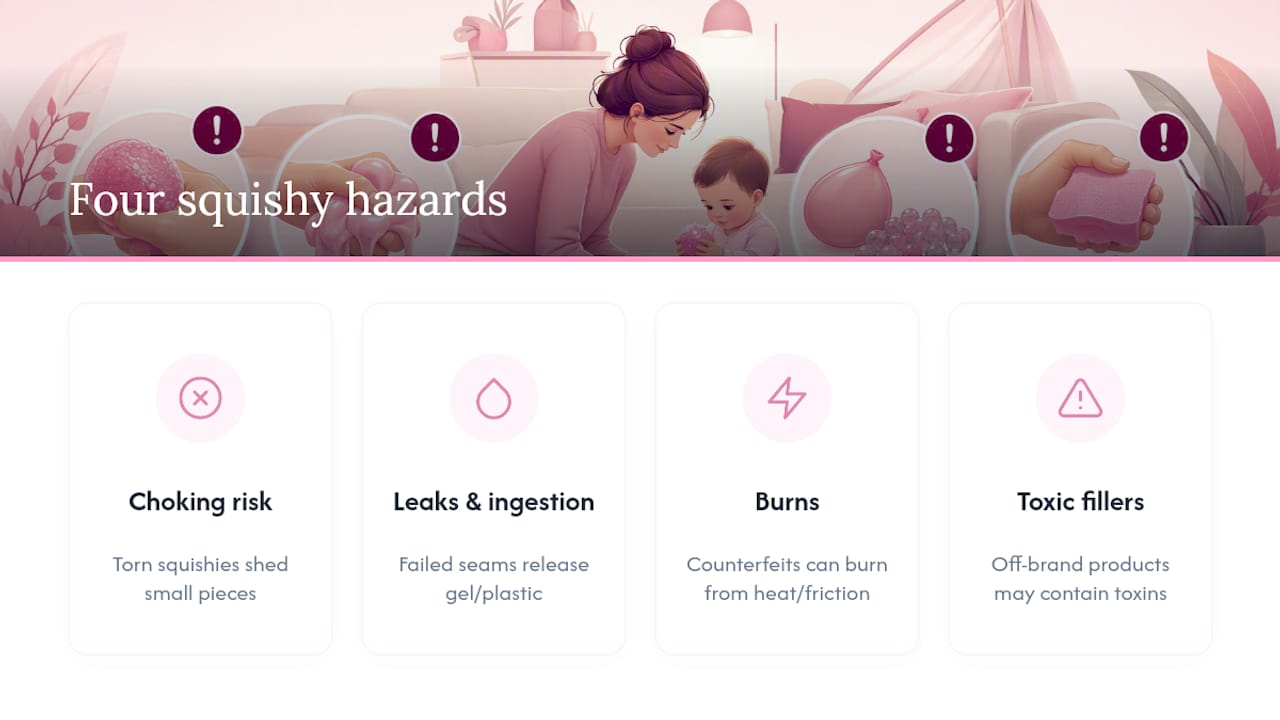
Leaks and ingestion come next, tied closely to gel and plastic-filled designs. When a seam fails, the filling itself becomes the hazard, not just a broken toy.
Burns are the hazard most parents miss entirely. The CPSC’s 2026 alert connects counterfeit squishies directly to burn injuries, likely from unsafe materials that react badly to heat or friction. Never microwave a squishy, no matter what a viral video promises about “extra squishiness.”
Toxic fillers round out the list. Off-brand and counterfeit products are the usual source, since they often skip the material testing that legitimate manufacturers run before a toy reaches shelves. This is exactly why checking for a real manufacturer name matters as much as checking the age grade.
Matching the Squishy to the Job It’s Actually Doing
Not every squishy serves the same purpose, and matching the toy to its intended use cuts down on mismatched expectations and safety risk at the same time.
Sensory and stress-relief squishies are built for repeated squeezing, so durability under constant pressure matters more than delicate detail. These fit kids and adults looking for a calming, tactile outlet, and a sturdier plush or well-made silicone piece holds up far longer under that kind of daily handling.
Collectible squishies prioritize design and variety over squeeze-durability, since they’re often displayed or traded rather than squeezed for hours. These suit kids age 9 and up who understand not to bite or overhandle a piece they’re trying to keep in good shape.
Desk and fidget squishies need to survive being grabbed mid-meeting or mid-homework session, so look for one with a tougher outer skin and a shape that fits comfortably in one hand. This category works well for older kids and adults alike, and it’s the one place where a slightly firmer, less delicate squishy actually performs better than a soft, squishy-for-squishy’s-sake design.
An Editorial Take on Age Labels That Undersell the Real Risk
The conventional advice on squishy safety stops at “choking hazard, keep away from babies,” and that’s not wrong, it’s just incomplete. The 2026 CPSC alert changed the conversation by tying counterfeit squishies to burn injuries, a risk almost no parent associates with a squeeze toy. That single warning does more to protect kids than another repetition of the standard 3+ label.
Here’s where I think most guidance falls short: it treats the age grade as the whole safety story. It isn’t. A well-built silicone squishy for a mature 4-year-old can be safer than a cheap, unbranded gel toy handed to an 8-year-old. Age matters, but construction quality and seller legitimacy matter just as much, sometimes more.
If you take one thing from this guide, prioritize checking who made the toy and what it’s filled with before you check the number on the box. The label tells you the manufacturer’s floor. It doesn’t tell you whether the seams will hold.
— Archie
Finding the Right Squishy in Archie’s Collection
Some squishy sellers provide age grades and material notes directly on product pages to offer clear information beyond just photos. That’s the practical advantage here: no digging through third-party reviews to figure out what’s actually inside a toy before it reaches your child’s hands.
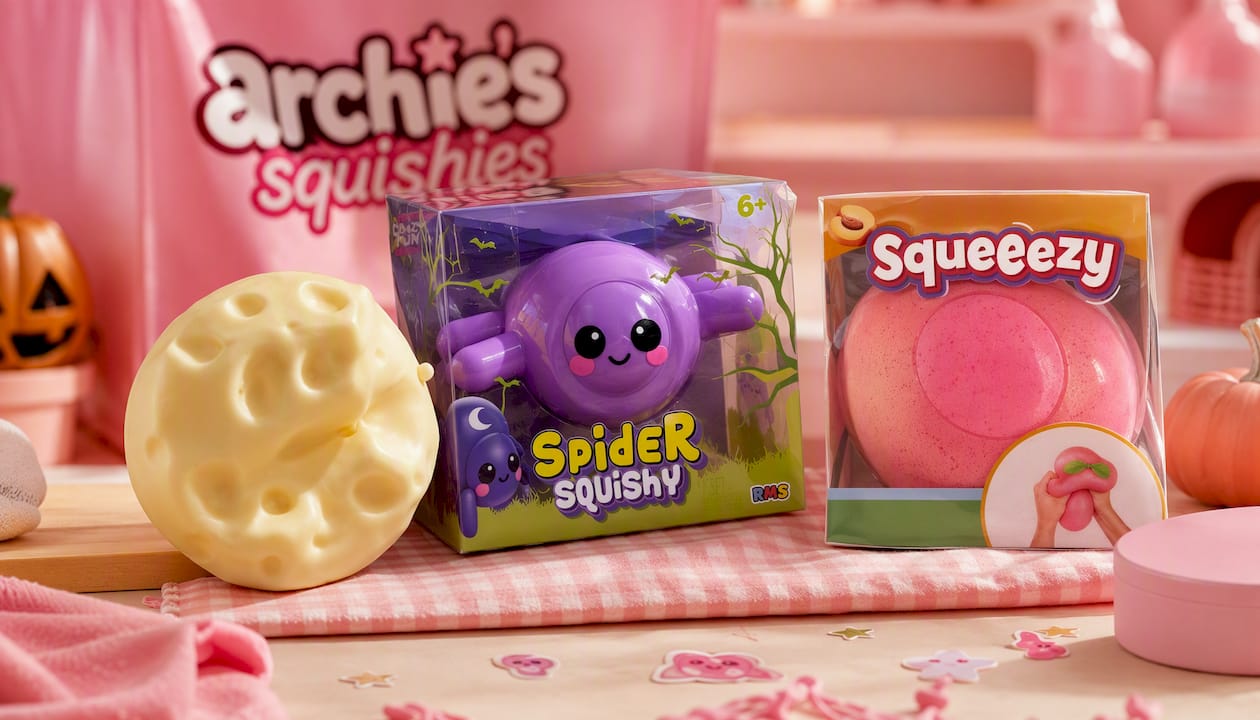
A few examples show how this plays out across different use cases. The Cheese Coconut Oil squishy works well as a novelty gift or sensory fidget for older kids and adults who want something visually fun to squeeze. The Halloween Special Spider Squishy fits seasonal gifting or a collector’s rotation, with product-page details covering size and material before you buy. The Squeezy Peach leans toward a friendly desk companion or a low-key gift pick for someone who wants a soft, low-pressure fidget option.
Before adding anything to your cart, check the age guidance and care instructions listed on the product page itself. Browse the full squishy collection to compare materials and find one that fits your child’s age and how they’ll actually use it.
Where to Verify Safety Information
- CPSC’s 2026 safety alert on counterfeit squishies and burn risks
- Consumer Reports’ warning on gel fidget toys and children
- Iowa Poison Center’s squishy safety guidance
- Poison Help chat for immediate exposure questions
- a squishy toy seller’s full catalog for age-graded product listings
Sources
- Consumer Safety Alert: CPSC warns consumers about fake and counterfeit squishy toys; reiterates warning about serious burn hazards
- Squishy fidget toys can be a sticky mess—or worse - Consumer Reports
- Squishy sensory toy safety: What parents and caregivers should know - Iowa Poison Center
- Poison Help chat
FAQ
What age are squishies appropriate for?
Most squishies carry a manufacturer age grade of 3+, mainly due to choking and tear risk, with gel or plastic-filled types best avoided for infants and any child who still mouths toys.
Is 7 too old for stuffed animals or plush squishies?
No. Plush toys and squishies have no upper age limit, and plenty of preteens, teens, and adults use them for comfort, collecting, or stress relief.
What are some good squishies for a 2-year-old?
At this age, stick strictly to products with a 3+ label unless you can verify the specific item is tested and rated for younger use, and avoid anything gel or plastic-filled entirely.
What age is appropriate for squishmallow-style plush toys?
Most plush-style squishy toys are graded 3+ on packaging, even when manufacturers report broader internal testing, largely because of crib-safety and small-attachment warnings for infants.
When should I throw away a squishy toy?
Discard any squishy immediately once you notice tears, bulges, sticky leakage, or a strong chemical smell, and contact Poison Help if a child has ingested any part of it.