
You're standing in front of a shelf full of pastel eggs, tiny dumplings, butter sticks, and mystery boxes, trying to decide which one won't fall apart in a week and which one won't end up ignored in a drawer. That's the squishy shopping problem, not “what looks cute,” but what feels right, holds up, and gets used.
The fastest way through the noise is simple, pick for the person first, then the texture, then the occasion. If you do that, little squishy toys stop looking like impulse clutter and start acting like smart little gifts, desk companions, and stocking stuffers. If you're already weighing whether squishies are worth buying at all, the practical answer is here: are squishies worth it.
Table of Contents
- Finding the Right Little Squishy Toy Without Overthinking It
- How Little Squishy Toys Became a Global Category
- Matching Squishy Textures to the Person You're Buying For
- How to Judge a Little Squishy Toy in Five Seconds
- Safety Rules Most Squishy Content Skips
- Picking the Right Squishy for Each Gift Occasion
- Building Your Shortlist and Buying with Confidence
Finding the Right Little Squishy Toy Without Overthinking It
A parent reaches a display wall, a teenager wants something for their desk, and a coworker needs a small, harmless gift that doesn't feel cheap. The mistake is staring at the whole category and trying to judge every shape at once. The better move is to narrow the job: stocking stuffer, stress toy, party favor, or collectible.
Once the use case is clear, the choice gets easy. A tiny, funny shape works when the goal is a quick grin. A slower, more substantial squeeze works when the toy needs to live on a desk or in a backpack. A mystery pick works when the recipient enjoys surprise more than certainty.
Practical rule: buy the toy for the moment, not for the shelf photo. A good little squishy toy should match the person's habits, not just your taste.
That's why texture matters almost as much as shape. Some people want a soft, return-to-form squeeze. Others want something denser, more playful, or weird enough to be memorable. If you start with the person's daily routine, you'll make a better choice in less time and waste less money on a novelty that never gets touched.
How Little Squishy Toys Became a Global Category
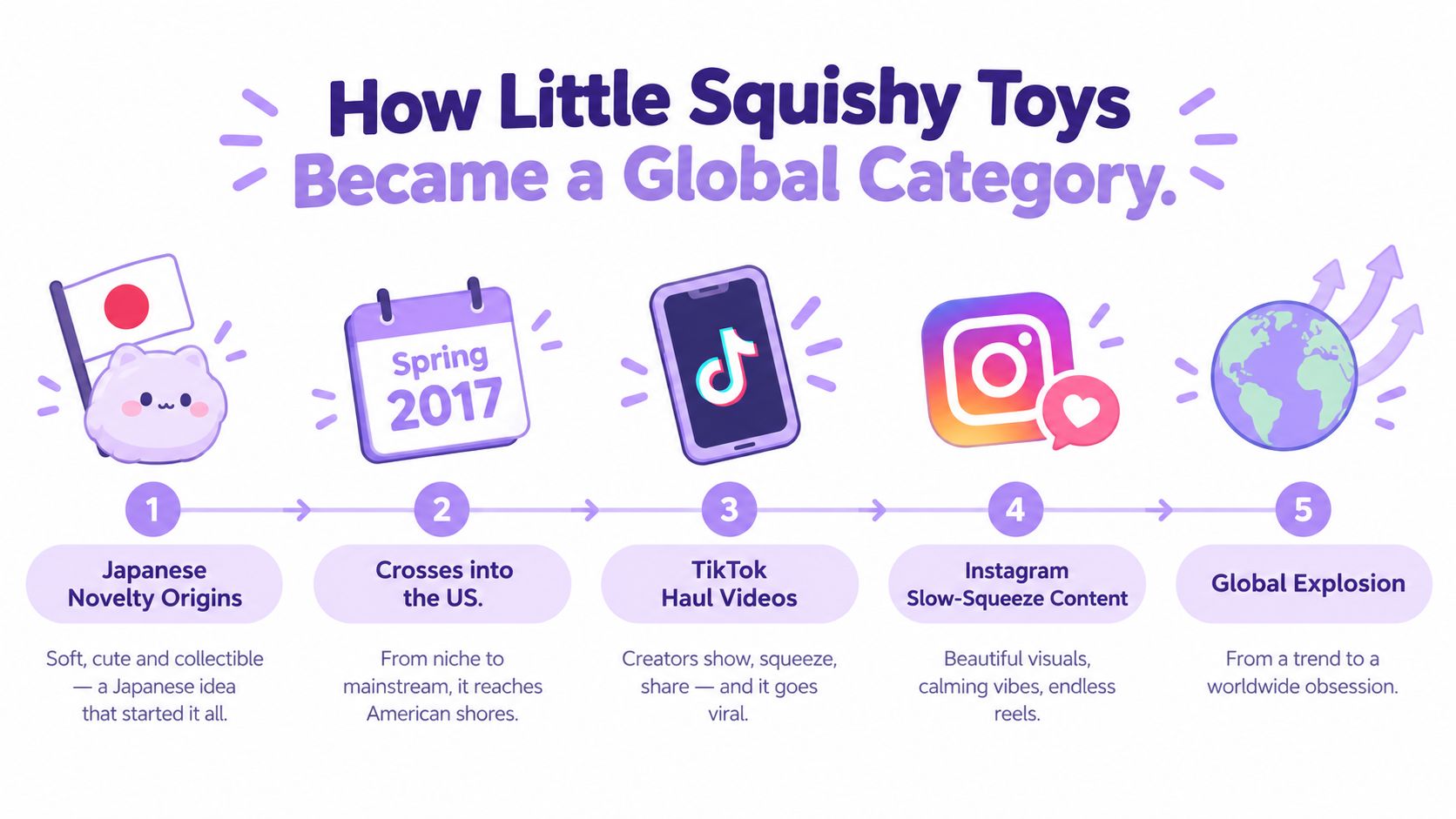
Little squishy toys came out of Japan as a modern toy category, and the early history points to the early 2000s. One documented milestone places iBloom's manufacturing of these toys in 2002, which is useful as a marker, not proof of a single inventor or a first-ever product a documented history of squishy toys. The formula was simple and smart: soft polyurethane foam, food and animal shapes, bright colors, scents, and the slow-rise rebound people recognize on sight.
That origin explains the category's appeal. These toys were built to be seen, collected, and handled, not treated like plain stress balls. Japanese game-center prizes, stationery shops, capsule-toy machines, and kawaii retail culture all helped define the look buyers still expect now.
The global jump happened later, and it happened fast. The category reached the United States in spring 2017, then spread through haul videos, unboxings, and slow-squeeze clips that taught the feel before a buyer ever touched one. That is why viral shapes change so quickly now, and why a dumpling, peach, butter stick, or cheese block can feel familiar even to people who never saw the early Japanese releases.
A good way to read the market is simple. Popularity spreads through video first, then gift buying, then copycats. Once a shape shows up everywhere, expect more versions, wider quality gaps, and bigger differences in hand feel. For a closer look at an oversized style, see this jumbo peach squishy guide.
Matching Squishy Textures to the Person You're Buying For
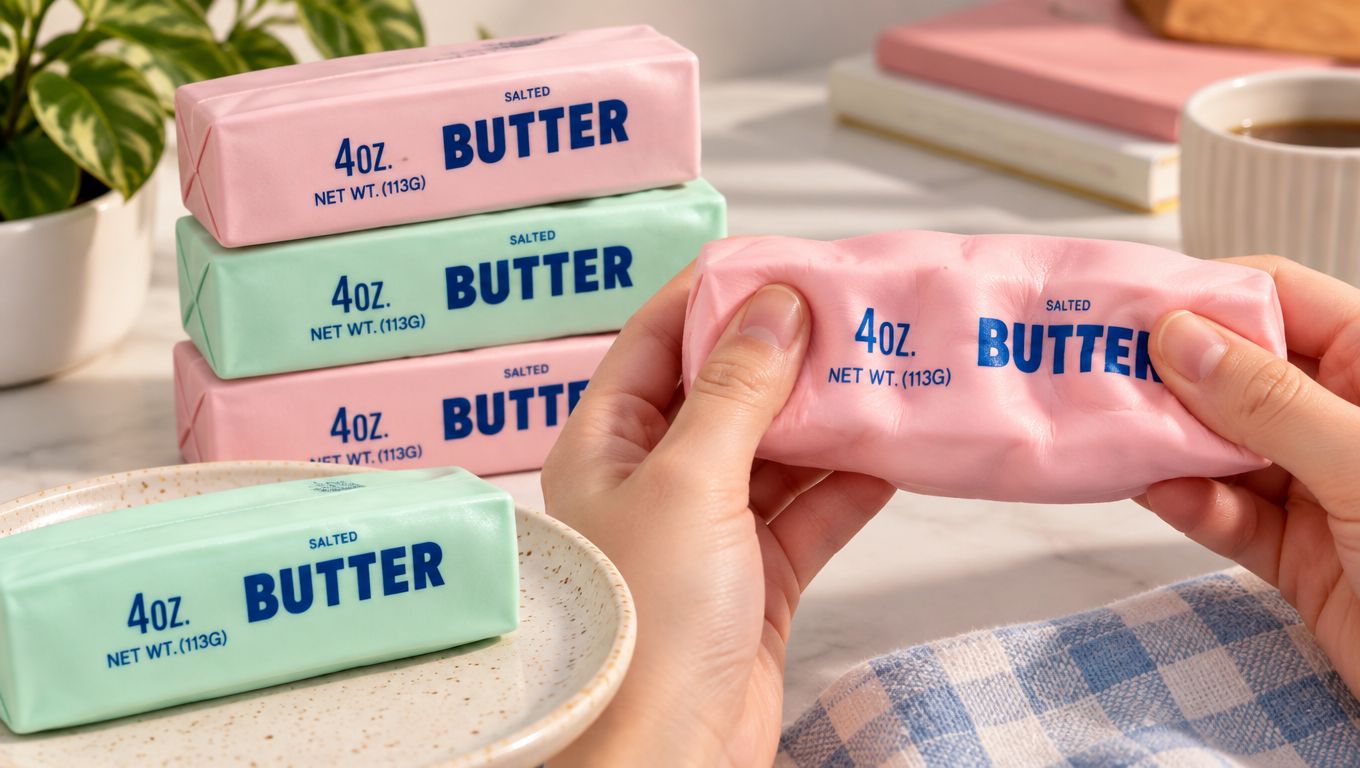
Texture is where people either fall in love with a squishy or toss it aside after one squeeze. If you're buying for a child, a teen, a teacher, or a collector, don't start with the shape. Start with how they like things to feel in the hand.
| Texture | How It Feels | Best For | Watch For |
|---|---|---|---|
| Slow rise | Soft squeeze, then gradually returns to shape | Desk toys, gentle stress relief, gift buyers who like classic squish | Can feel too soft if someone wants resistance |
| Crunchy | More active squeeze, tactile and playful | Collectors, kids who like fidgety feedback, novelty gifts | Can feel messy or rough if the build is cheap |
| Buttery | Smooth, cushioned, easy to keep squeezing | Stocking stuffers, casual fidget use, funny food-themed gifts | May be too light for buyers who prefer firmer toys |
| Gel-filled | Slimmer, more fluid motion, often heavier in the hand | Older teens and adults who want a different feel | Look closely at seams, leaks, and heat exposure |
A crunchy style like Crunchy Butter Squishy fits buyers who want a toy that feels active instead of sleepy. It's the kind of squishy that works when the gift should be playful first and decorative second. For a person who likes tactile feedback and funny food shapes, that's a strong pick.
The difference between textures sounds small until you hand one to the wrong person. A slow-rise toy suits someone who likes repeat squeezes at a desk. A butter-style toy suits someone who wants something cute and easy. A gel-filled toy makes sense when the buyer wants a more distinct physical feel and understands that construction matters more than appearance.
If you want a label to match the vibe, start with the shape, then check the texture language on the listing. That's the whole game. The wrong texture turns a cute gift into a drawer item.
If you want another example of how a soft, moldable style gets described in product language, compare it with this stuffed toy style note.
How to Judge a Little Squishy Toy in Five Seconds
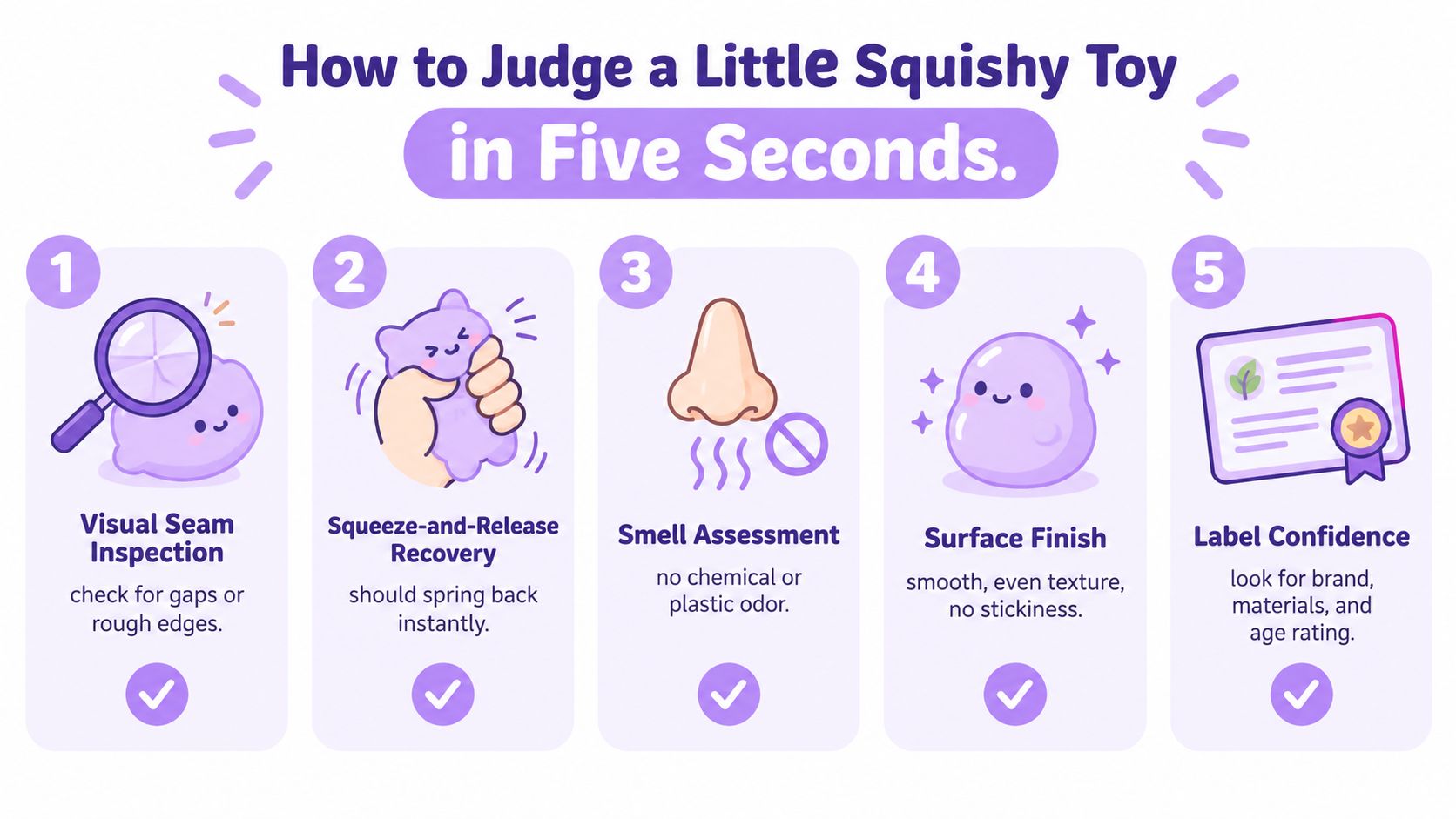
A good squishy should look finished before you even squeeze it. If the seams are sloppy, the surface is sticky, or the shape already looks warped, move on. Cheap toys announce themselves fast.
Here's the five-second check I'd use in a shop or online listing:
- Visual Seam Inspection. Look for gaps, rough edges, or spots where the material seems uneven. A clean seam usually tells you the toy was made with more care.
- Squeeze-and-Release Recovery. Press it and watch what happens. For flexible foam toys, recovery should feel intentional, not limp or permanently flattened.
- Smell Assessment. Strong chemical or plastic odor is a bad sign. I don't buy anything that makes the bag smell harsh before it's even opened.
- Surface Finish. The outside should look smooth and even, not tacky, dusty, or peeling.
- Label Confidence. You want clear brand information, material details, and an age rating. If the seller hides basics, I treat that as a warning.
A squishy can look adorable and still be a bad buy. Finish and labeling tell you more than the photo ever will.
For foam-based toys, durability is not guesswork. The practical quality-control measures used for flexible polyurethane foam include compression-force deflection, compression set, tensile strength, heat aging, and recovery testing, with ASTM D3574 identified as the principal standard for evaluating flexible foam properties Flexible foam standards. That's the technical reason a toy that looks fine in a listing can still come home flat, weak, or uneven after a few squeezes.
If a product listing tells you exactly what the toy is made of, what age it's meant for, and what the recovery should feel like, that's a better sign than flashy photos. If it doesn't, assume you're looking at a low-trust item and keep shopping.
Safety Rules Most Squishy Content Skips
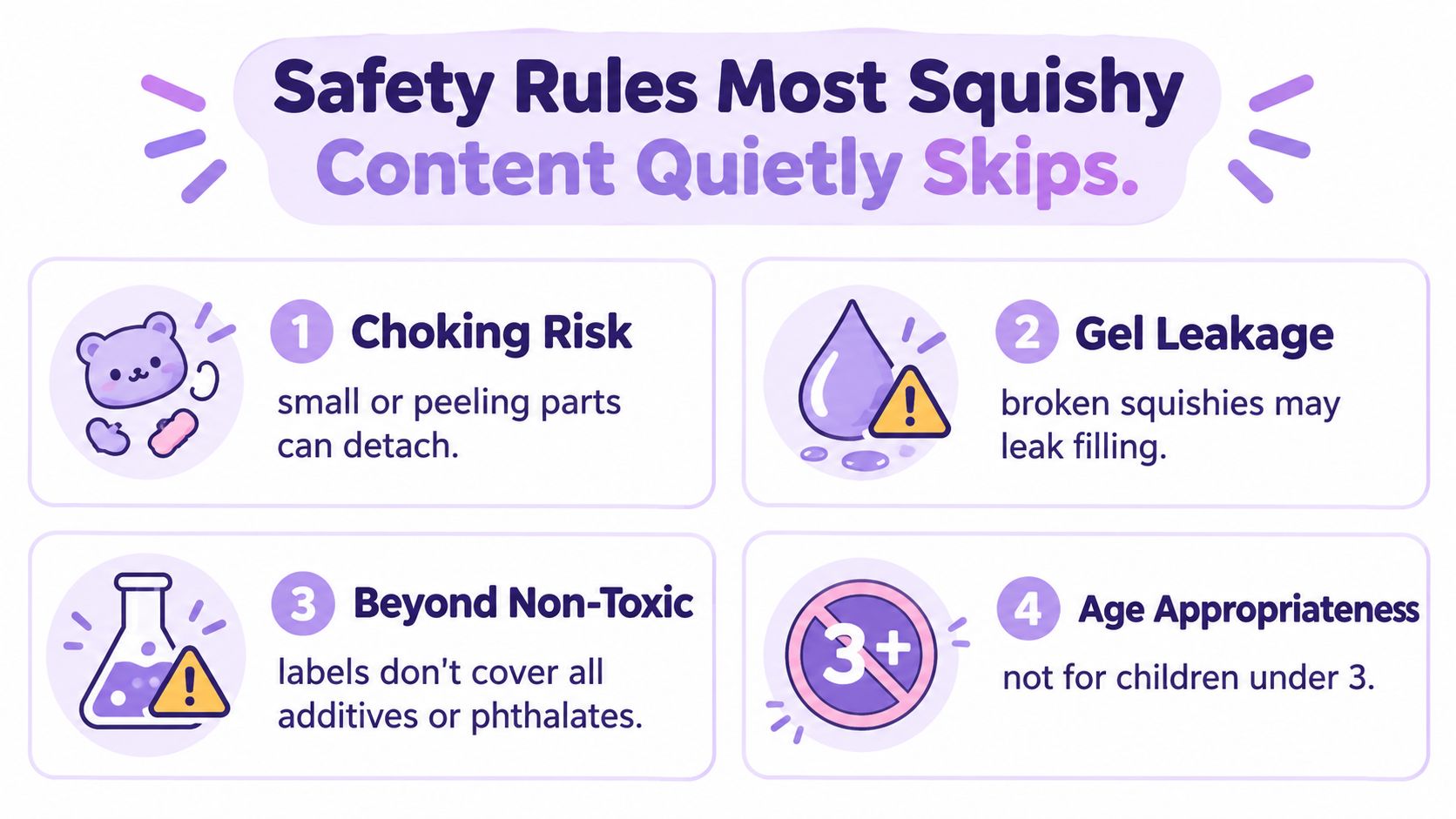
Parents should care less about the cute listing and more about what the toy is made of. Non-toxic on a page does not make a squishy safe in every situation. The danger comes from what's inside, how it's built, and who's using it.
The U.S. Consumer Product Safety Commission says children's toys must meet federal requirements covering hazards such as small parts, lead, phthalates, water beads, and other hazardous substances, and noncompliant products cannot legally be imported or sold in the United States CPSC toy safety FAQ. If a toy is marketed for children 12 and under, it also needs third-party testing and a Children's Product Certificate, which is why I only trust listings that show clear age and compliance details. For a plain-English rundown of what to ask for, the squishy safety for kids guide covers the same basics I tell shoppers at the counter.
Once a squishy breaks, the risk goes up fast. Independent Consumer Reports coverage found meaningful product-to-product differences, including one toy with pH 2, and separate reporting noted that some ruptures produced temperatures above 200°F Consumer Reports squishy fidget investigation. I do not treat a split, leaking, sticky, or strangely warm squishy like a harmless mess. It is done.
Keep them out of hot cars, direct sunlight, and near heaters. Heat changes the toy, and not in a good way.
If a squishy cracks or leaks, stop play right away, wash hands, and throw the toy away. For kids, especially younger ones, detachable parts and peeling edges are choking concerns, so they get no pass. If you want the simple rule I use, buy cleanly labeled toys, keep heat away, and toss damaged ones fast.
Picking the Right Squishy for Each Gift Occasion
A stocking stuffer should be tiny, funny, and easy to hand over without explanation. A party favor should feel grab-and-go, which means simple shapes and lower decision friction. A classroom reward needs to survive being touched, tossed in a backpack, and carried home without drama. A teen desk toy needs enough tactile payoff that it doesn't get ignored after day one.
For a stress-relief gift, I'd pick something with a calm, repeatable squeeze and a shape that doesn't scream “toy aisle.” That's where a compact, desk-friendly option wins over a novelty that looks loud but feels flimsy. If the person likes surprises, mystery-format gifting makes more sense than forcing a single shape choice.
If you're buying for a party or stocking and want something with a clear surprise angle, the Original Mystery Dumpling Squishy makes sense because the appeal is discovery, not perfection. If you want a straightforward collectible for a desk or backpack, keep the shape readable and the build simple. If the recipient is a collector, novelty can be stronger than comfort. If the recipient is a child, clarity and age fit matter more than trendiness.
My blunt take: buy the toy that fits the setting, not the one with the loudest thumbnail.
That's where Archie's catalog style fits naturally. It keeps viral squishies, mystery options, and lower-cost choices in one place, so a shopper can compare by use case instead of browsing random listings. If you're torn, start with one textured favorite and one surprise option, then trim the rest.
Building Your Shortlist and Buying with Confidence
Make your shortlist small. Pick one toy that matches the person, one that passes the five-second check, and one that doesn't raise safety questions. That's enough to buy well without overthinking it.
If you want a shortcut, browse the best sellers collection and compare those picks against the texture and safety checks above. The right squishy is usually the one that looks finished, feels right, and fits the occasion without creating extra hassle.
Archie's Squishies focuses on tactile, trend-aligned squishies for gifting, collecting, and everyday fidget use, with options that fit quick decisions instead of endless browsing. If you want a cleaner way to shop little squishy toys, visit Archie's Squishies and use this guide to pick the one that matches the person you're buying for.
Published via Outrank app